Can Babies Use Side Sleeper Pillows?
Babies should not sleep with a side sleeper pillow. Infant pillows and positioners can create suffocation, entrapment, and overheating risks, so babies should sleep on a firm, flat surface without loose bedding.
On this page (10 sections)
- Can babies use a side sleeper pillow?
- Why is side sleeping risky for infants?
- What is the safest sleep setup for a baby?
- Are adult pillows safe around babies?
- Can a baby use a pillow for reflux or congestion?
- What can side sleepers use instead of a baby pillow?
- How many pillows should be in a baby's crib?
- What should parents do with pillows during feeding?
- When should a child start using a pillow?
- What is the safe choice for a side sleeper pillow for baby?
Babies should not sleep with a side sleeper pillow for baby. The safest setup is a firm, flat, separate sleep surface with your baby placed on their back and no pillow, positioner, blanket, toy, or other soft item in the sleep area.
A side sleeper pillow may look like a way to keep an infant in place, but it can place soft material near the baby's face. Babies have limited strength and movement, so they may not be able to move away if their nose or mouth becomes covered.
Can babies use a side sleeper pillow?
No, babies should not use a side sleeper pillow during sleep. The American Academy of Pediatrics recommends placing infants on their backs on a firm, flat, noninclined surface without soft bedding or other objects.
The FDA also warns against infant sleep positioners, including products designed to keep a baby in a particular position. Read the FDA's safe sleep positioner warning before using any pillow, wedge, nest, or positioner marketed for infant sleep.
A pillow can create several hazards:
- The baby's face may press into the fabric or filling.
- The baby may slide into a gap beside the pillow.
- The pillow may limit the baby's ability to move the head.
- Extra padding can trap heat around the body.
- A positioner may encourage side sleeping when back sleeping is recommended.
These risks apply even when the pillow looks small, soft, or specially shaped for babies. A product's label does not make it suitable for unsupervised infant sleep.
Why is side sleeping risky for infants?
Side sleeping can let an infant roll onto the stomach more easily. Stomach sleeping and soft objects in the sleep space can raise the risk of sleep-related harm.
Newborns and young infants have less control over their head, neck, and trunk. If a baby turns into bedding or a pillow, the baby may not have enough strength to clear the airway.
Always place your baby on their back for naps and nighttime sleep. Do not use rolled towels, blankets, cushions, or pillows to hold the baby in place.
What if my baby settles better on the side?
A baby who settles on their side still needs to be placed on their back for sleep. If your baby repeatedly turns, remove every soft item from the sleep space and ask a pediatrician about the pattern.
Once a baby can roll from back to front and front to back independently, you usually do not need to keep turning the baby back after placing them down. The crib, bassinet, or play yard should still have only a fitted sheet on a firm mattress.
Do not use a side sleeper pillow to stop rolling. A clear sleep space is safer than trying to restrict movement with a cushion or positioner.
What is the safest sleep setup for a baby?
Use a firm, flat mattress with a fitted sheet in a separate sleep space. Keep the baby on their back and keep the area around the baby empty.
A safe setup generally includes:
- A crib, bassinet, or play yard that meets current safety requirements.
- A firm, flat mattress designed for that sleep space.
- One fitted sheet made to fit the mattress.
- Your baby placed on their back for every sleep.
Avoid adult beds, couches, recliners, nursing pillows, and inclined surfaces for routine infant sleep. These areas can contain gaps, cushions, or soft materials that are not designed for unsupervised infant sleep.
Room sharing without bed sharing can make nighttime care easier while keeping the baby on a separate surface. Keep smoke, alcohol, and sedating substances away from the sleep environment.
Are adult pillows safe around babies?
Adult bed pillows should stay out of an infant's sleep space. Their size, loft, and filling can cover a baby's face or create a gap beside the body.
Adult pillows are made for older sleepers and come in many shapes and materials. For example, the bed pillows for sleeping guide covers adult pillow types, but those products are not recommendations for infant sleep.
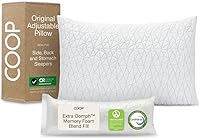
The Coop Home Goods Original Adjustable Pillow is a queen size adult pillow with an 8 in thickness, cross-cut memory foam and microfiber fill, and an adjustable design. Its intended age range is adult, so it belongs in an adult sleep setup, away from a baby's crib or bassinet.
The Beckham Hotel Collection Bed Pillows Queen Size Set of 2 is also designed for adults. Each pillow measures 20 x 28 in, has a 100% cotton cover, and uses down alternative fill.
Do not place either pillow under a baby, beside a baby, or inside a crib. Use an adult pillow only when an adult is awake and the baby is not sleeping on or near it.
Can a baby use a pillow for reflux or congestion?
Do not add a pillow or incline under a sleeping baby unless a qualified health professional gives specific instructions. Raising one end of a mattress or using a wedge can allow the baby to slide into an unsafe position.
If your baby has reflux, congestion, noisy breathing, or another concern, ask the pediatrician for safe care instructions. A pillow is not a substitute for an evaluation.
The same caution applies to nursing pillows. They may support feeding while an adult is awake and watching, but they should not be used as a sleep surface.
What can side sleepers use instead of a baby pillow?
Adults can choose a pillow that supports their own sleeping position, while babies sleep without pillows. For adult shoppers, compare bed pillows on sale.
If you are comparing adult options, a side sleeper pillow vs back sleeper pillow guide can explain how loft and support differ.
For adult side sleepers, the Contour Legacy Leg & Knee Foam Support uses memory foam in a leg-shaped design. It measures 10 x 9.5 in and is intended for adult sleeping support between the legs and knees.
The Contour pillow does not belong in a crib, bassinet, or play yard. Its soft foam shape and adult design are for an adult bed only.
If you are choosing an adult pillow for yourself, compare what type of pillow is best for your sleep position, body size, and preferred firmness. A pillow that suits an adult can still be unsafe for an infant.
How many pillows should be in a baby's crib?
A baby's crib should have zero pillows. Keep the mattress covered only by a fitted sheet made for that mattress.
Adult sleep advice can differ. For example, how many pillows should you sleep with covers personal comfort and alignment, while infant safe sleep depends on removing soft objects from the sleep area.
Do not add a pillow because the baby seems to prefer a side position. Do not use a pillow to support the head, separate the knees, or create a nest around the body.
What should parents do with pillows during feeding?
Remove nursing and bed pillows before placing a sleeping baby down. Feed while awake and alert, then move the baby to a clear, firm, flat sleep surface.
If you feel sleepy during a feeding, avoid couches and recliners, and ask another adult for help when possible. If you do fall asleep, move the baby to their separate sleep surface as soon as you wake.
Keep adult pillows, blankets, and cushions away from the baby's face during contact. Supervision does not make a soft sleep surface safe if the caregiver becomes drowsy.
When should a child start using a pillow?
Introduce a pillow only when your child is developmentally ready and no longer using an infant sleep space. Many families wait until the child moves to a toddler bed, but your child's health professional can help with timing.
Start with a small, firm pillow and watch how your child uses it. Keep the pillow away if the child pushes it over the face, sleeps under it, or uses it to climb.
For ongoing breathing, sleep, or positioning concerns, speak with your pediatrician. Do not rely on a side sleeper pillow for a baby to manage a health problem.
What is the safe choice for a side sleeper pillow for baby?
The safe choice is no side sleeper pillow for infant sleep. Place your baby on their back on a firm, flat surface with no pillows or positioners, and keep the sleep area clear.
Choose adult pillows only for adult beds. The Coop Home Goods pillow suits adults who want adjustable fill, the Beckham set suits adults who want 2 cotton-covered down alternative pillows, and the Contour pillow suits adult side sleepers who want leg and knee separation.
For more adult pillow guidance, see how long is a king pillow, Cushion Lab deep sleep pillow reviews, how to choose a side sleeper pillow with an arm hole, and best cooling gel memory foam pillows. None of these adult pillow choices should be placed in an infant's sleep space.
Frequently asked questions
Can a baby sleep on a side sleeper pillow?
No. Babies should not sleep on a side sleeper pillow or any other infant pillow or positioner.
Put your baby on their back on a firm, flat, separate sleep surface with no pillows, blankets, toys, or other soft items.
Ask your pediatrician about any medical concern or special sleep instruction.
Why are side sleeper pillows unsafe for babies?
A side sleeper pillow can block a baby's nose and mouth, allow the baby to slide into an unsafe position, or create an entrapment space. Infants do not have the same ability as older children to move away from an obstruction, so pillows should stay out of the sleep area.
When can a child use a pillow?
There is no single age that fits every child. Many families wait until the child is older and sleeping in a toddler bed, then introduce a small pillow while watching how the child uses it.
Ask your child's health professional before adding a pillow, especially if your child has breathing or movement concerns.
What should I do if my baby rolls onto their side?
Always place your baby on their back for sleep. Once a baby can roll from back to front and front to back independently, you usually do not need to keep turning the baby back, but the sleep space should remain clear of pillows, positioners, blankets, and other soft items.